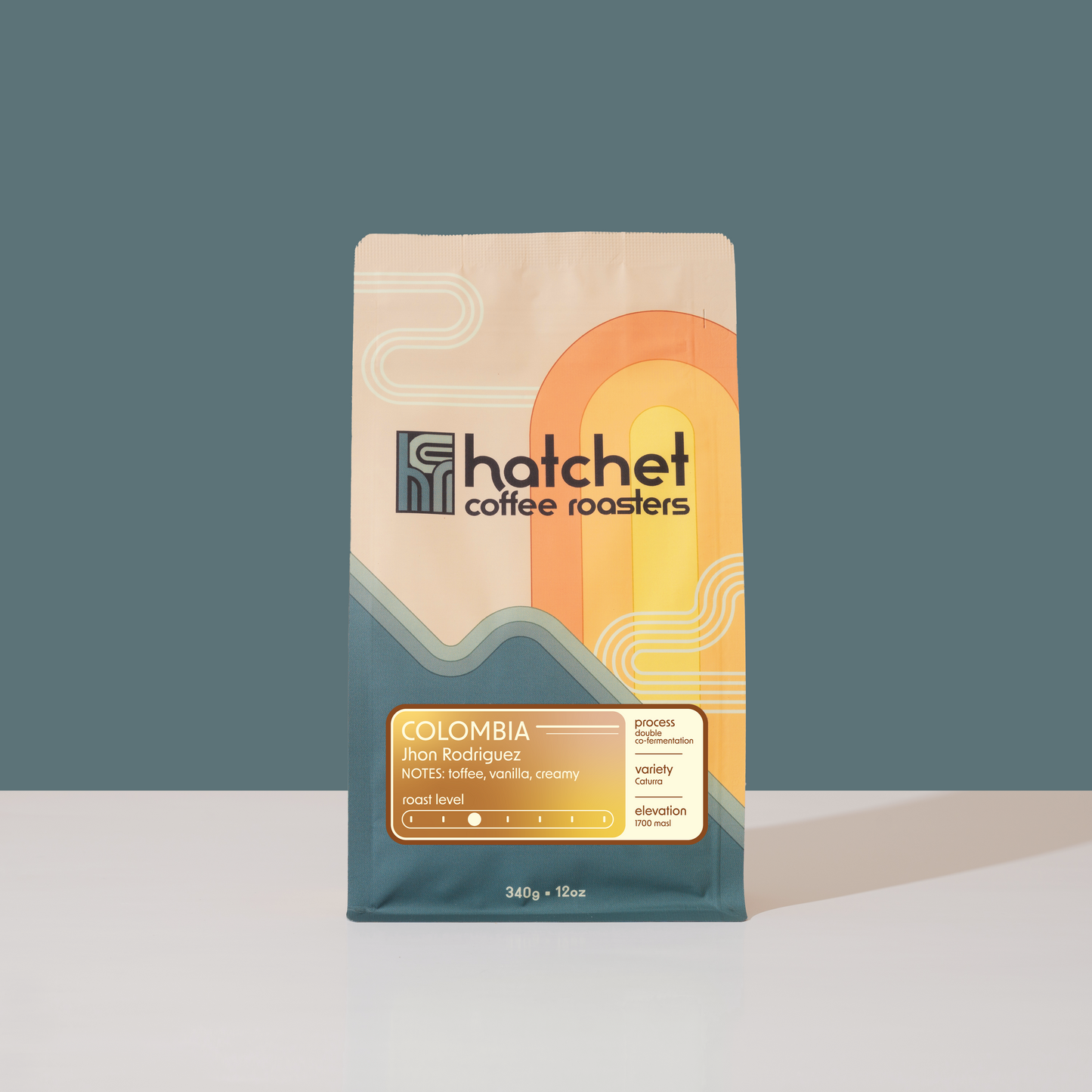
Colombia Jhon Rodriguez - Caturra Milk Co-Ferment
Colombia Jhon Rodriguez - Caturra Milk Co-Ferment
Regular price
$28.00 USD
Regular price
Sale price
$28.00 USD
Unit price
per
Couldn't load pickup availability
Tasting Notes: Toffee, Vanilla, Creamy
Origin: Colombia
Region: Vereda La Esperanza, Acevedo – Huila, Colombia
Farm: Jhon Rodriguez, Finca Río Negro
Process: Double Co-Fermentation*
Variety: Caturra
Elevation: 1700 masl
Importer: Know Where Coffee
This coffee is a very unique offering that uses a double co-fermentation process of lactic fermentation with milk and alcoholic fermentation with selective yeast to achieve a distinctly creamy cup rich with developed, brown sugar notes. It comes from Jhon Rodriguez, proprietor of Finca Río Negro, whose dedication to the mastery of advanced post-harvest processing methods has allowed him to produce some of the most unique coffees around.
Jhon comes from a long line of coffee growers. The farm was purchased by his grandparents in the '60s when they moved from Colombia's coffee axis to Huila. The farm was passed down to his father and then him. The farm's focus is now on growing specialty varieties and exploring methods beyond traditional post-harvest processing.
1. Lactic Fermentation
1. Lactic Fermentation
The lactic fermentation is carried out using lactic acid bacteria (LAB) that were previously isolated from the same coffee through earlier microbiological processes.
This fermentation takes place under anaerobic conditions (without oxygen) to promote the activity of the lactic acid bacteria. During this stage, milk is added, contributing to the development of compounds that enhance the formation of lactic acids and aromatic precursors, resulting in a creamier and more complex sensory profile.
2. Alcoholic Fermentation
The alcoholic fermentation is performed using Saccharomyces cerevisiae yeast, which was also previously isolated from the same coffee.
This process takes place over approximately three days in plastic fermentation containers (barrels), where the yeast converts the sugars present in the coffee mucilage into alcohols, esters, and other aromatic compounds that contribute to the coffee's sensory profile.
3. Integration of the Processes
Once both fermentations are complete, they are carefully blended, allowing the aromas and flavors developed during each fermentation to interact. This integration produces a distinctive sensory profile characterized by lactic, sweet, and complex fermented notes.
*allergen warning: since the lactic fermentation step uses milk this coffee may contain milk proteins