Brazil Marcelo Assis Bioma Peaberry Natural
Brazil Marcelo Assis Bioma Peaberry Natural
Regular price
$25.50 USD
Regular price
Sale price
$25.50 USD
Unit price
per
Couldn't load pickup availability
Tasting Notes: Orange Zest, Cocoa, Almond Butter
Origin: Brazil
Region: Cerrado Mineiro, Campos Altos
Farm: Marcelo Assis, Bioma Cafe
Process: Natural
Variety: Paraiso, Arara, IBC12
Elevation: 1206 masl
Importer: Crop 2 Cup
This is the first peaberry we've had in recent memory. It comes to us from Marcelo Assis of Bioma Café in Campos Altos, Brazil. This coffee is silky smooth like milk chocolate and almond butter. The cup has incredible body and texture with a beautiful overall balance. As it cools the hint of citrus and orange zest start to come through in a way that pairs really well with the chocolate and almond notes.
Bioma Café began as a partnership between Marcelo Nogueira Assis and Flavio Marcio Silva, who first met in 2001. Flavio had experience managing his family’s businesses, while Marcelo had just graduated from a technical school of agriculture. After nearly a decade of studying land, they founded their first coffee farm in 2010, dedicated entirely to specialty, in Campos Altos, Minas Gerais.
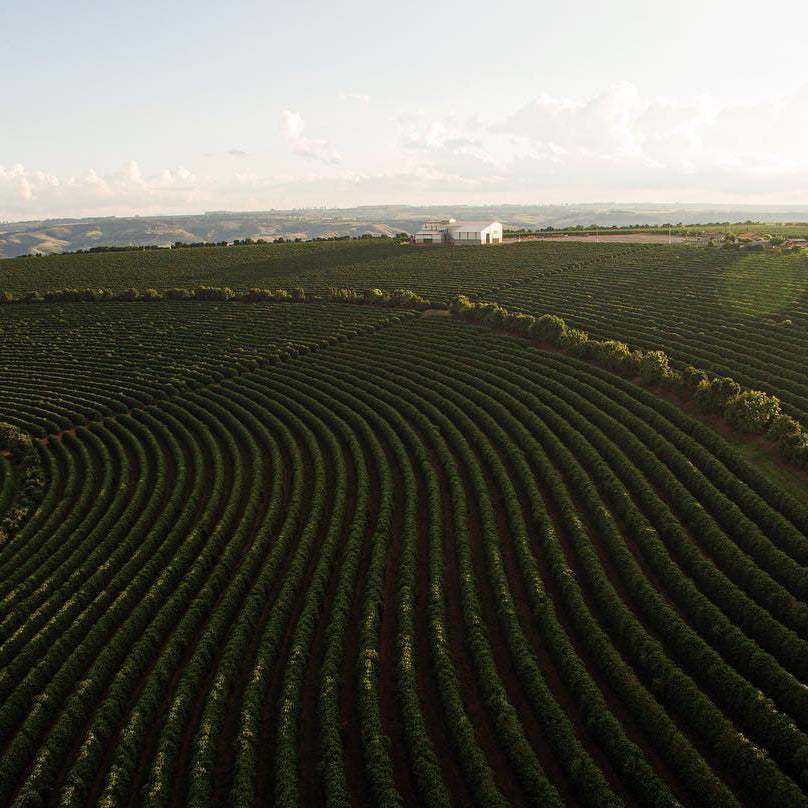
Their site is a 1,200-meter plateau in Cerrado Mineiro, covering 229 hectares divided into six distinct plots. Olhos D’Água is the central hub for processing, and management emphasizes data-driven agronomy, treating every plot as its own ecosystem. Soil health is maintained through extensive cover crops, customized nutrition, and organic fertilizers produced on-site. By 2025, Bioma expects 60% of inputs to be fully organic.
Bioma’s motto is “coffee for a better future,” and their work reflects that ambition. They employ 22 full-time and 25 seasonal workers, continuing to invest in their team, technology, and sustainability. On the tech front, they are developing post-harvest infrastructure, quality mapping, and digital traceability systems. Their work illustrates an alternate path for Cerrado producers: specialty achieved through deliberate, sustainable management.
The lot is a blend of distinct post-harvest batches, combining some standard drying with other controlled fermentations. Batches were patio dried in thick layers on cement, lightly raked after the first two days, and dried over ~5–8 days before being blended into a single lot.
This is the first peaberry we've had in recent memory. It comes to us from Marcelo Assis of Bioma Café in Campos Altos, Brazil. This coffee is silky smooth like milk chocolate and almond butter. The cup has incredible body and texture with a beautiful overall balance. As it cools the hint of citrus and orange zest start to come through in a way that pairs really well with the chocolate and almond notes.
Bioma Café began as a partnership between Marcelo Nogueira Assis and Flavio Marcio Silva, who first met in 2001. Flavio had experience managing his family’s businesses, while Marcelo had just graduated from a technical school of agriculture. After nearly a decade of studying land, they founded their first coffee farm in 2010, dedicated entirely to specialty, in Campos Altos, Minas Gerais.
Their site is a 1,200-meter plateau in Cerrado Mineiro, covering 229 hectares divided into six distinct plots. Olhos D’Água is the central hub for processing, and management emphasizes data-driven agronomy, treating every plot as its own ecosystem. Soil health is maintained through extensive cover crops, customized nutrition, and organic fertilizers produced on-site. By 2025, Bioma expects 60% of inputs to be fully organic.
Bioma’s motto is “coffee for a better future,” and their work reflects that ambition. They employ 22 full-time and 25 seasonal workers, continuing to invest in their team, technology, and sustainability. On the tech front, they are developing post-harvest infrastructure, quality mapping, and digital traceability systems. Their work illustrates an alternate path for Cerrado producers: specialty achieved through deliberate, sustainable management.
The lot is a blend of distinct post-harvest batches, combining some standard drying with other controlled fermentations. Batches were patio dried in thick layers on cement, lightly raked after the first two days, and dried over ~5–8 days before being blended into a single lot.