Ethiopia Reshad Ababulgu White Honey
Ethiopia Reshad Ababulgu White Honey
Regular price
$27.00 USD
Regular price
Sale price
$27.00 USD
Unit price
per
Shipping calculated at checkout.
Couldn't load pickup availability
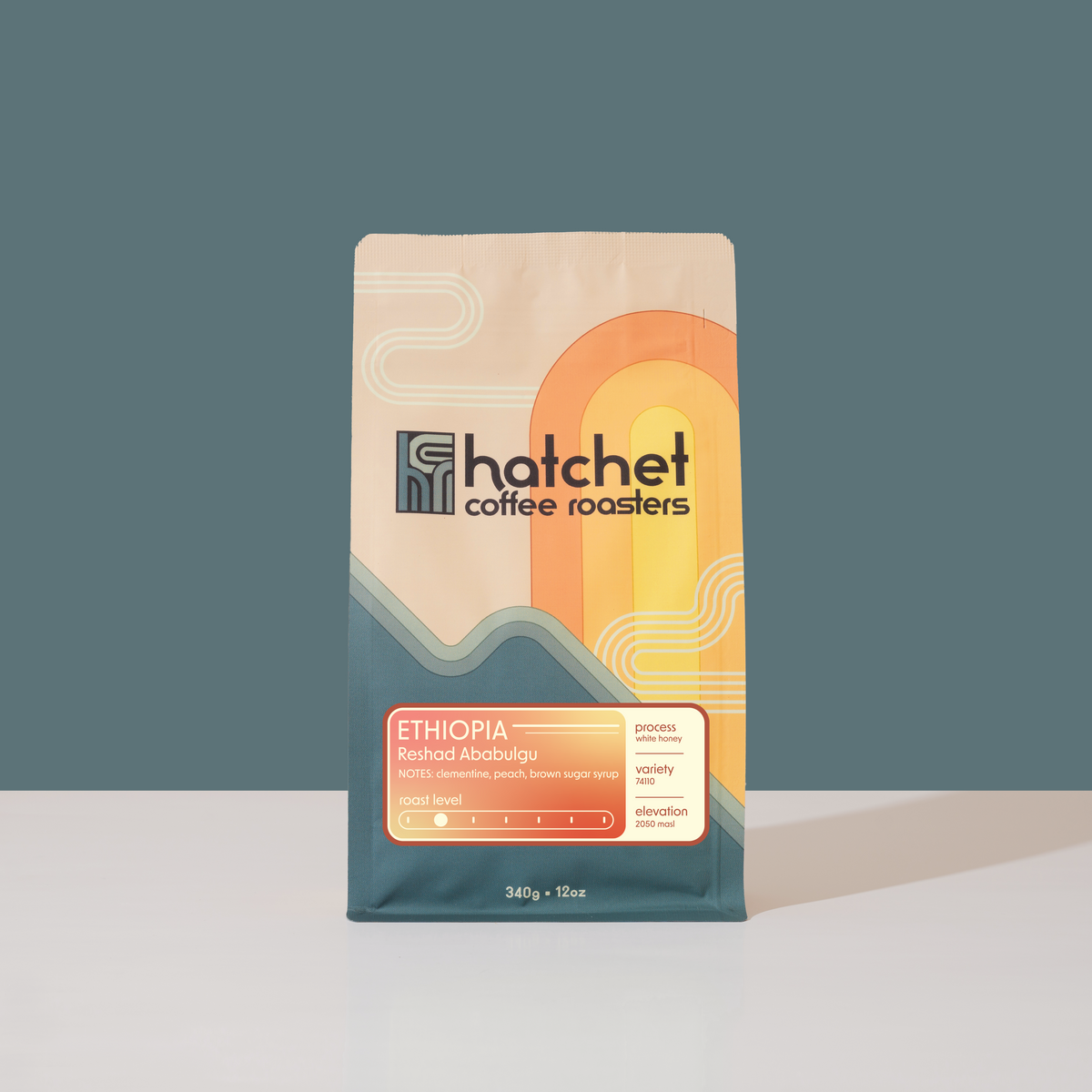
Tasting Notes: Clementine, Peach, Brown Sugar Syrup
Origin: Ethiopia
Region: Limu
Farm: Reshad Ababulgu
Process: White Honey
Variety: 74110
Elevation: 2050 MASL
Importer: C2C
This offering comes to us from Reshad Ababulgu, a small producer in Ethiopia's Limu woreda. It is an excellent example of a high-scoring, fully traceable honey process Ethiopian microlot. Freshly brewed, the hot cup is full with prominent notes of stone fruits like peach and nectarine. There is also caramelized sweetness that combined with the coffee's medium body reminds us of a simple syrup made with a darker sugar like brown sugar.
Origin: Ethiopia
Region: Limu
Farm: Reshad Ababulgu
Process: White Honey
Variety: 74110
Elevation: 2050 MASL
Importer: C2C
This offering comes to us from Reshad Ababulgu, a small producer in Ethiopia's Limu woreda. It is an excellent example of a high-scoring, fully traceable honey process Ethiopian microlot. Freshly brewed, the hot cup is full with prominent notes of stone fruits like peach and nectarine. There is also caramelized sweetness that combined with the coffee's medium body reminds us of a simple syrup made with a darker sugar like brown sugar.
With this being a white honey process, meaning 80-100% of the mucilage is removed before processing, we were surprised by the complexity and body as we would usually expect these to land closer to the tasting experience of a washed coffee. There is, however, no lack of fruited flavors in this coffee. As the cup cools, we get fully ripened clementine taking the forefront.
Reshad Ababulgu is one of several smallholder farmers near the Biftu Gudina co-op who, after years of selling cherry into the orbit of cooperatives like Duromina, are beginning to step into direct export themselves. With drying materials, outside support, and export licenses now in place, producers like Reshad - and others in his community, including Mustefa Abasadi and Abo Hussein - represent an important shift in Ethiopia’s coffee landscape: highly capable farmers with proven quality track records gaining more control over how their coffee is marketed and sold.
A second-generation coffee farmer, Reshad works land that has been in his family for roughly 60 years. His father inherited it from Reshad’s grandfather and later passed it on to him. In the early 2010's, Reshad replanted with improved varieties and more modern farming practices. He lives less than a kilometer from the farm with his wife and three children, with coffee having now become the family's sole livelihood.
Reshad Ababulgu is one of several smallholder farmers near the Biftu Gudina co-op who, after years of selling cherry into the orbit of cooperatives like Duromina, are beginning to step into direct export themselves. With drying materials, outside support, and export licenses now in place, producers like Reshad - and others in his community, including Mustefa Abasadi and Abo Hussein - represent an important shift in Ethiopia’s coffee landscape: highly capable farmers with proven quality track records gaining more control over how their coffee is marketed and sold.
A second-generation coffee farmer, Reshad works land that has been in his family for roughly 60 years. His father inherited it from Reshad’s grandfather and later passed it on to him. In the early 2010's, Reshad replanted with improved varieties and more modern farming practices. He lives less than a kilometer from the farm with his wife and three children, with coffee having now become the family's sole livelihood.